

Key takeaways:
- Bitcoin’s drop below $75,000 marks a sharp decoupling from a record-breaking stock market fueled by the AI boom.
- Crypto trader sentiment remains weak as key US regulatory acts face ongoing delays.
Bitcoin’s (BTC) rejection at $78,000 on Thursday marked a decoupling from traditional markets after two months of strong correlation. Wednesday’s decline below $75,000 happened while the tech-heavy Nasdaq 100 Index jumped to an all-time high.
The factors behind Bitcoin’s underperformance are unlikely to fade in the near term, reducing the odds of a bullish breakout above $82,000.
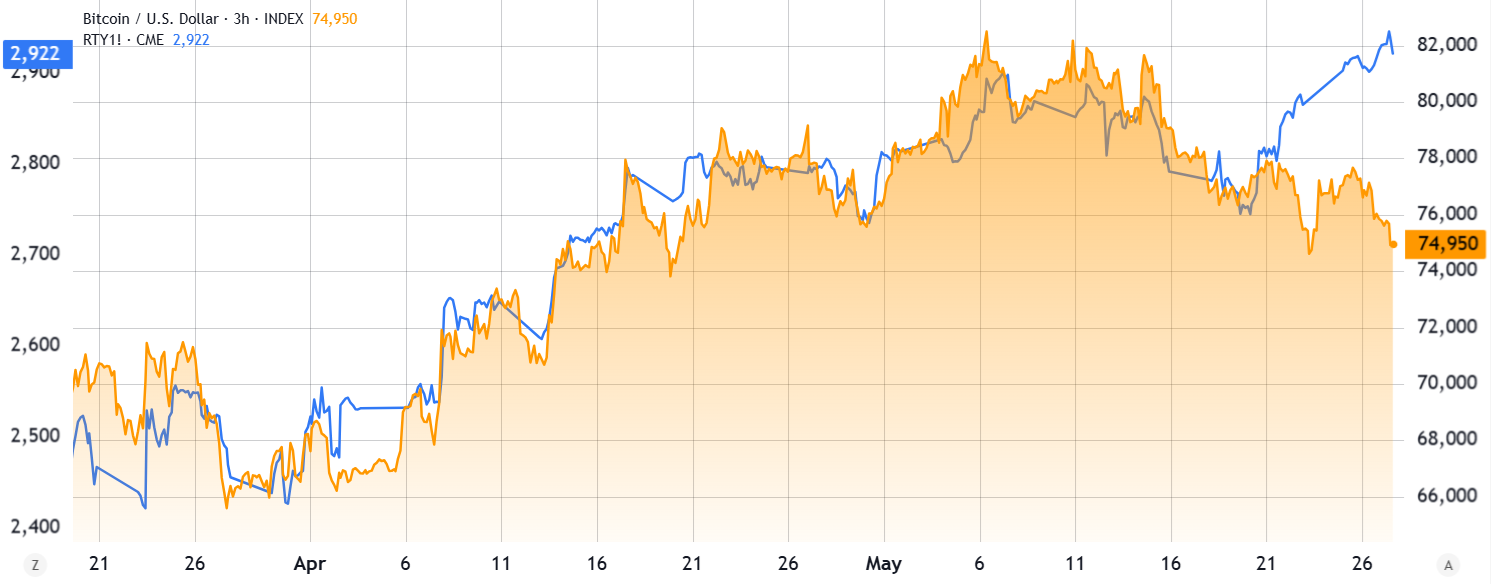
Russell 2000 Index (left) vs. Bitcoin/USD (right). Source: TradingView
The US small-cap Russell 2000 Index reached a record high on Wednesday, signaling that traders are not particularly worried about the macroeconomic environment. Despite the war in Iran nearing the 3-month mark, strong earnings momentum in the artificial intelligence sector has contributed to generalized optimism in the stock market.
The exact rationale behind the weaker demand for Bitcoin might never emerge, but it likely includes recent BTC reserve sales by publicly listed miners and their subsequent pivot toward AI infrastructure. The latest example includes TeraWulf (WULF US) announcing the addition of a 1-gigawatt high-performance computing capacity in Kentucky.
Pro-crypto regulation stalls
Further bearish sentiment emerged after Trump Media & Technology Group (DJT US) transferred 2,650 BTC, worth $205 million at the time, to a cryptocurrency exchange address on Friday, according to Lookonchain data. The media conglomerate controlled by President Donald Trump’s family had previously accumulated 11,542 BTC at a cost basis above $118,500.
The lack of regulatory progress in the legislature has also negatively affected traders’ sentiment. The Digital Asset PARITY Act overhauls cryptocurrency taxation by exempting mining and staking rewards from being taxed until sold. The proposal was formally introduced in May, but is not yet scheduled for hearings or votes.
Similarly, the Digital Asset Market CLARITY Act awaits a full Senate floor vote, but no official date has been set. The bill creates a comprehensive market structure framework for digital assets, dividing oversight between the Commodity Futures Trading Commission (CFTC) and the US Securities and Exchange Commission (SEC), while complementing the already-passed GENIUS Act for stablecoins.
Fed policy trajectory puzzles investors
Investors likely anticipated a stronger balance sheet expansion from the US Federal Reserve (Fed), expecting continued US Treasury buying and additional liquidity for the markets. However, the prevailing trend from previous months faded in April as the Fed’s total assets stabilized.
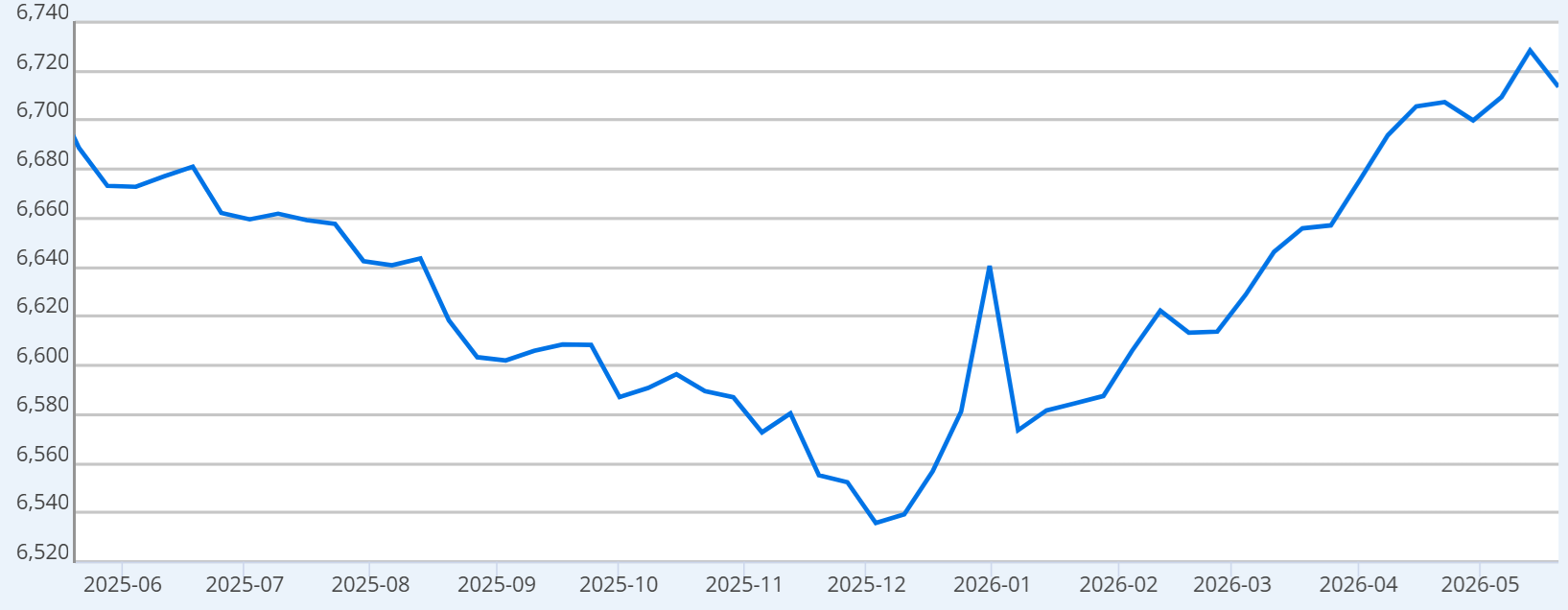
US Federal Reserve total assets, USD billion. Source: St Louis FED
The Fed’s decision to act more cautiously was likely driven by a surge in oil prices, which raises inflation. Expansionary measures could further exacerbate the issue and negatively impact economic growth. The Fed’s total assets have remained stuck near $6.7 trillion since April 15.
Bitcoin’s weak performance also contrasts with a massive surge in demand for AI infrastructure companies.
Related: Bitcoin price lags bullish US tech stocks–Is there a silver lining?
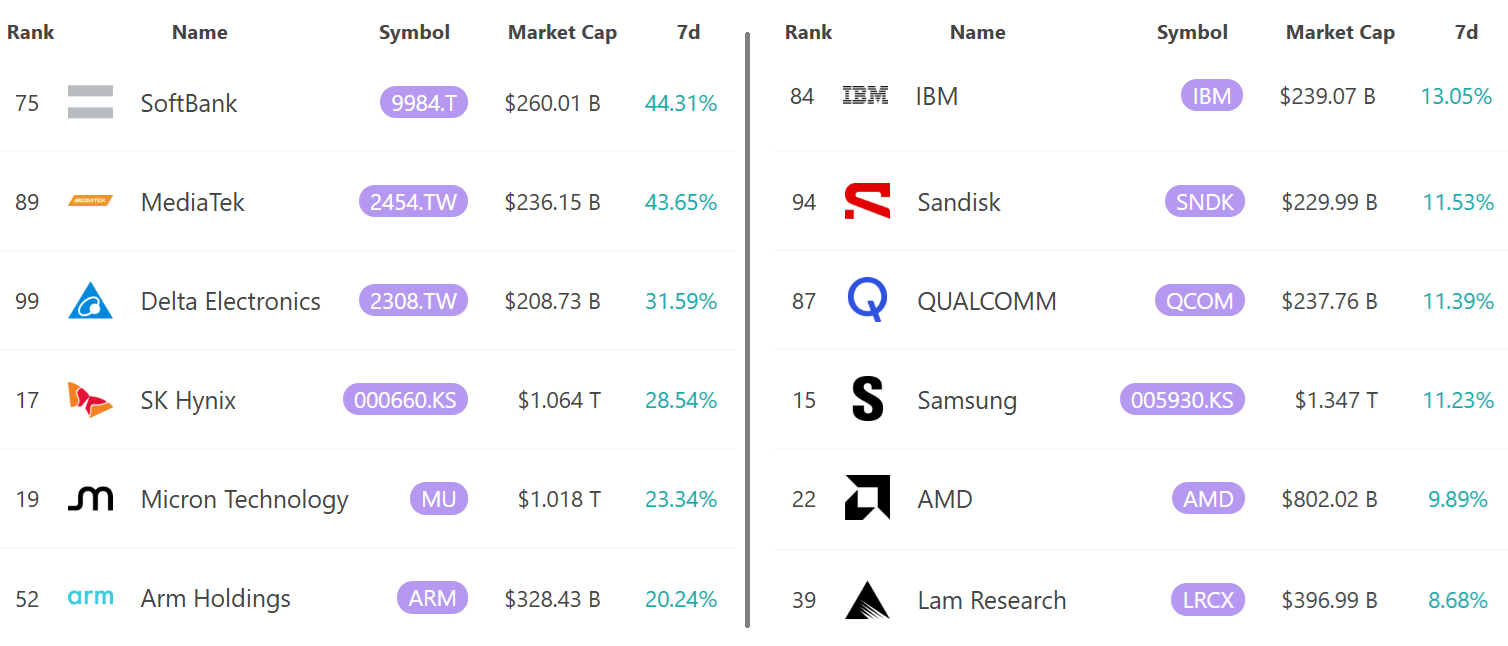
Top 7-day gains among world’s 100 largest assets. Source: 8marketcap
Memory chipmakers SK Hynix (000660 KS) and Micron (MU US) surged past a $1 trillion market capitalization for the first time ever, joining multiple stocks that gained 20% or more over the past week alone.
Markets#Bitcoin #falls #BTC #miners #pivot #procrypto #legislation #stalls1779933950