
MicroStrategy earnings for the second quarter carried an $8.22 billion net loss and a new metric, BTC Hurdle ARR, that Strategy’s own Bitcoin yield is currently running below.
The company set that hurdle at 10.8% and reported a 4.5% bitcoin yield for the year. Chief Financial Officer Andrew Kang called the figure its effective cost of credit.
What the New Metric Is Meant to Show
Strategy published BTC Hurdle ARR and Net Bitcoin Per Share on its website this week, timed to results. Together they are meant to show whether Bitcoin accretion outruns what the company pays creditors and preferred holders.
Kang set out the test himself.
“Our BTC Hurdle ARR of 10.8% represents our current effective cost of credit. If BTC ARR is above this rate, Net BTC Per Share captures a positive spread and appreciates faster than bitcoin on a go-forward basis,” Andrew Kang, Chief Financial Officer, Strategy said in the statement.
Follow us on X to get the latest news as it happens
The comparison is not perfectly clean. Strategy published no current BTC ARR figure, and BTC Yield tracks per-share accretion over a fixed window rather than an annual rate.
The Distance Between 4.5% and 10.8%
The direction is still checkable. A 4.5% yield banked between January 1 and July 26 works out near 8% annualized, leaving a shortfall of roughly three percentage points.
On the company’s own logic, a negative spread means Net Bitcoin Per Share fails to outpace Bitcoin itself. Anyone holding MSTR for leveraged exposure is currently paying more for credit than the machine returns.
Scrutiny of that machinery is not new. The debate over new metrics has trailed Strategy through 2026, as has the collapse in MSTR’s premium to its holdings.
Why the Cost of Credit Keeps Climbing
The hurdle rises with whatever Strategy pays for money. STRC issuance brought in $7.53 billion this year, growth of 254%, and management pushed the payout rate on those preferred shares to 12%.
Preferred dividends alone consumed $400.7 million during the quarter, against $49.1 million a year earlier. Roughly $218.4 million of Bitcoin was sold to help cover them.
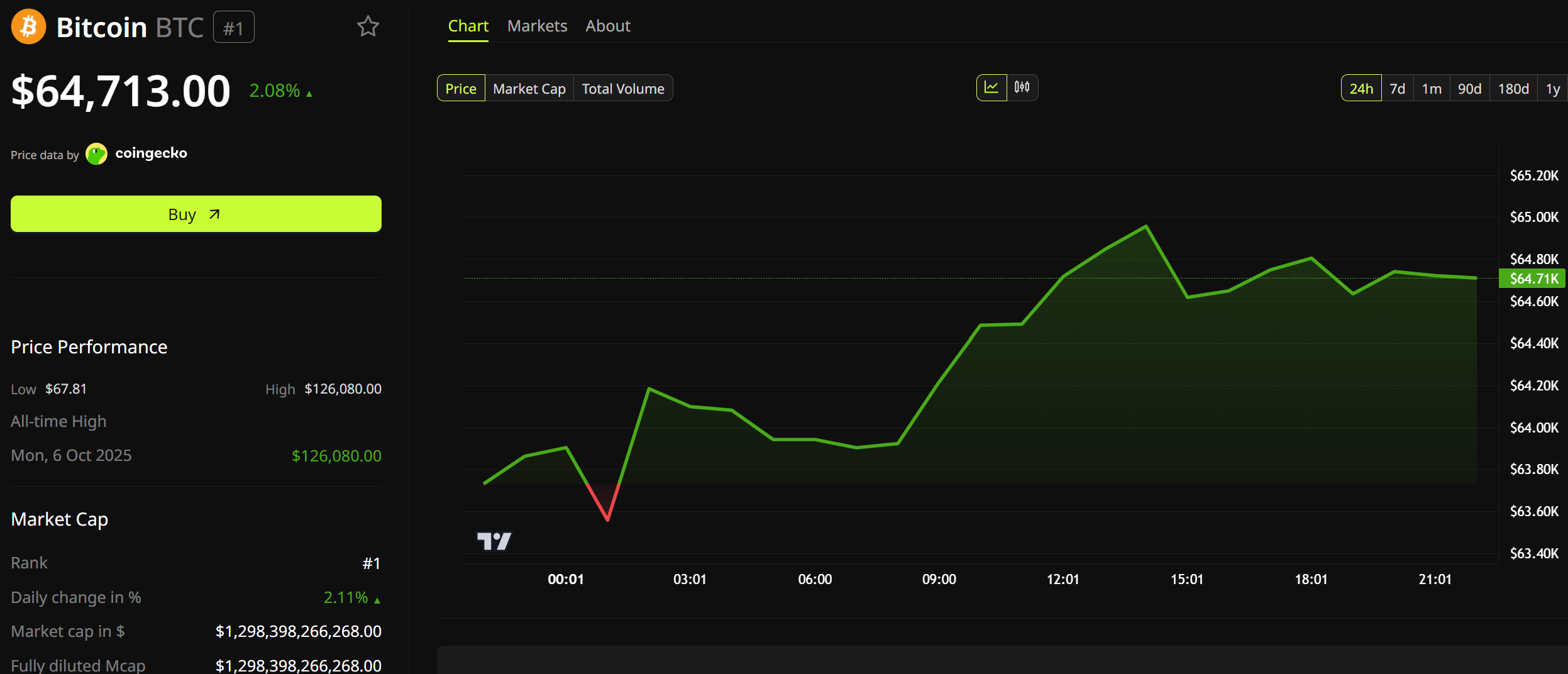
The quarter was punishing. An $8.32 billion writedown produced a net loss of $8.22 billion, or $24.45 per diluted share. With Bitcoin trading near $64,713, the 843,775 coin position sits about $8.9 billion beneath its $63.69 billion cost.

Founder and Executive Chairman Michael Saylor reads the period as a transition rather than a strain.
“In the midst of this phase of muted bitcoin sentiment and market skepticism, we continue to evolve our business model and establish Digital Credit as a new asset class,” said Saylor.
Parts of the release support that reading. Convertible notes fell from $8.21 billion to $6.71 billion after a May buyback struck at an 8% discount to par, and software revenue grew 6.9% to $122.4 million.
A $3.75 billion reserve covers dividends and interest for 2.1 years, so nothing breaks imminently, though STRC’s durability remains contested. The sharper question is whether the spread flips positive before that cushion thins.
The post MicroStrategy Earnings Flip From $10 Billion Profit to $8.2 Billion Loss in 1 Year appeared first on BeInCrypto.
Markets,Bitcoin (BTC) News,Breaking,Editor’s Pick,MicroStrategy#MicroStrategy #Earnings #Flip #Billion #Profit #Billion #Loss #Year1785455869