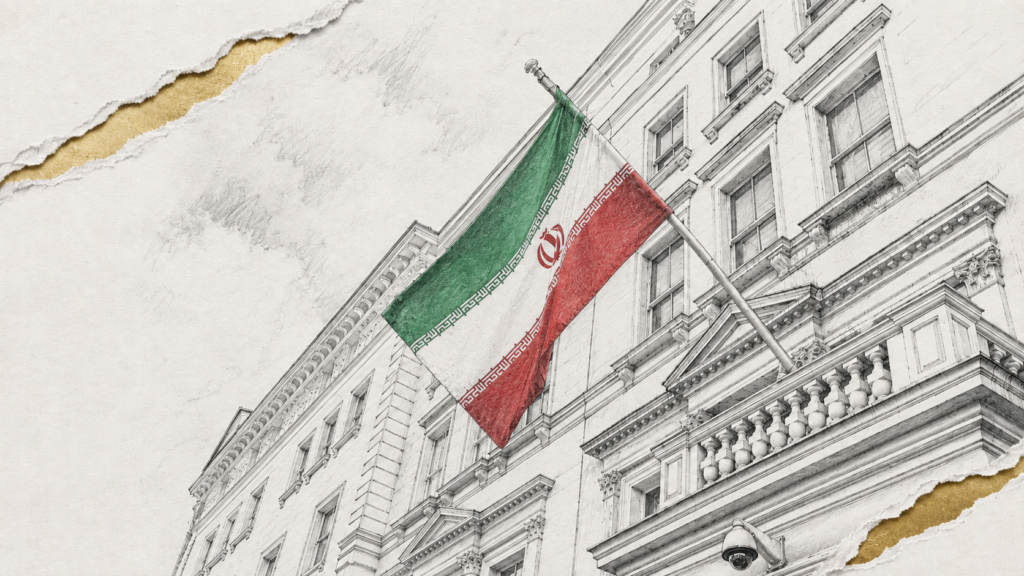

Blockchain analysts traced at least $4 billion through an unlicensed exchange that gave Iran’s central bank and a 2,000-site gambling network access to global crypto markets.

Original Image Credits: Tartezy / Shutterstock.com
Posted August 3, 2026 at 8:34 am EST.
An unlicensed crypto exchange run out of a Dubai office above a budget hotel has processed at least $4 billion since May 2024 as the hub of an Iranian sanctions-evasion operation, according to a Reuters investigation published Friday. At least $676 million of that allegedly reached Binance.
The exchange, Shelbit, is run by Iranian expatriate Siavash Kayvanpour and gave Iran’s central bank, an illegal gambling network and other sanctioned entities access to global crypto markets, Reuters reported, citing data from two crypto investigative firms and researcher Rich Sanders. Shelbit has no website, and the door at its registered address carries the sign of a watch trading company also registered to Kayvanpour.
This story is an excerpt from the Unchained Daily newsletter.
Subscribe here to get these updates in your email for free
What the Blockchain Data Showed
Shelbit handled at least $125 million from the Central Bank of Iran, much of it directly, plus about $20 million from a suspected Iranian mining operation routed through intermediary wallets. Its customers included a Farsi-language gambling network of more than 2,000 websites, one of which alone accounted for $130 million.
The exchange also interacted with wallets Israel attributes to the Islamic Revolutionary Guard Corps and with Nobitex, the Iranian exchange Washington sanctioned in June. Shelbit is “an IRGC operation, and that’s plain as day,” Sanders said in remarks to Reuters. Reuters said it could not determine whether the Guards directly controlled Shelbit, or where most of the crypto ended up.
Of the money that reached Binance, about $540 million moved after Dubai’s Virtual Assets Regulatory Authority fined Shelbit in 2025 for providing unlicensed exchange services. Sanders said he notified Binance of Shelbit’s Iranian links in October 2025, and Reuters reported that the flows continued after that warning.
Binance Says Its Controls Worked
Binance said in a statement to Reuters that Shelbit never held an account and that “the flows associated with Shelbit to Binance were not deemed high risk by an independent third party blockchain analytics firm.” It did not identify the firm, and said it could not “reconcile” the sum that moved after the fine, according to the same statement.
“When users associated with Shelbit interacted with our platform, our compliance program operated as it should have: it investigated, froze the relevant accounts, and reported them to law enforcement,” the company said in the same statement. It has since gone further, telling The Block it has “no evidence” for Sanders’ account and disputing the $540 million figure.
Binance pleaded guilty in 2023 to breaking U.S. anti-money-laundering rules, including processing Iranian trades, and paid $4.3 billion. The Treasury has reportedly pressed the exchange over its compliance with that settlement’s monitoring program. Binance won licenses for its main trading platform in the United Arab Emirates in December.
Dubai’s regulator ordered Shelbit on July 24 to “cease and desist immediately from all unlicensed Virtual Asset activities,” according to Reuters. The Office of Foreign Assets Control “is aware of these allegations and is taking them very seriously,” a Treasury spokesperson said in a statement to Reuters.
Related Listen: Why Authorities Can’t Freeze Crypto Fast Enough: DEX in the City
AI-assisted content: This article was produced with the assistance of AI tools and was reviewed, edited, and fact-checked by a member of the Unchained editorial team before publication.
Regulation,binance,Iran,Sanctions,yahoobinance,Iran,Sanctions,yahoo#IranLinked #Dubai #Exchange #Binance #Million #Reuters #Investigation #Finds1785761348