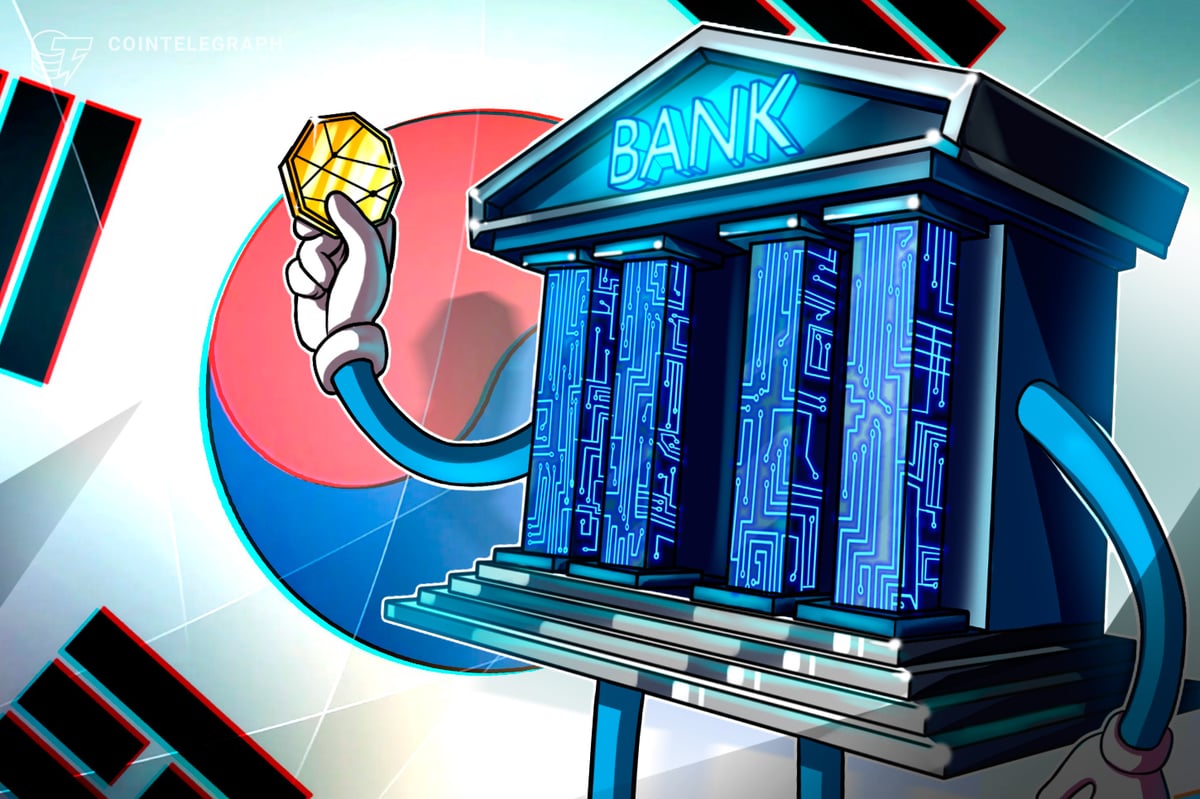

The newly appointed Governor of the Bank of Korea, Shin Hyun-song, has voiced support for central bank digital currencies (CBDCs) and tokenized deposits in his first public address.
Shin, who began his four-year term after an inauguration ceremony in Seoul on Tuesday, said the central bank will advance the second phase of “Project Hangang,” a Bank of Korea-led pilot project to test a blockchain-based, wholesale CBDC system.
He also pointed to international cooperation efforts, including the “Agora Project,” an international collaborative initiative launched in April 2024 by the Bank for International Settlements (BIS) and seven central banks to explore the tokenization of cross-border payments. Shin said these initiatives “will elevate the status of the Korean won in the digital payment environment.”
While previous reports had suggested Shin was open to won-based stablecoins, he did not mention stablecoins in his inaugural speech.
South Korea’s stablecoin bill remains stalled, with regulators and lawmakers split over whether issuance of won-pegged tokens should be limited to commercial banks or opened up to non-bank players such as fintech and tech firms.
Related: South Korea draft bill puts stablecoins, RWAs under finance laws: Report
Shin flags geopolitical risks
Shin also mentioned rising tensions in the Middle East and its effect on oil prices, saying that the Bank of Korea must adapt to rising uncertainty driven by geopolitical shocks, inflation pressures and shifts in the global economy.
“We must strive for price and financial stability through the operation of prudent and flexible monetary policy,” he said.

Shin was the BIS economic adviser from May 2014 to March 2026 and also served as head of the Monetary and Economic Department from January 2025, according to the BIS website.
Last month, he published an academic paper arguing that stablecoins fail to meet a core property of money, “unity,” because blockchain networks are inherently fragmented across different chains with varying fees, security and decentralisation levels.
Related: Naver-Dunamu filing sets IPO committee, listing timeline for fintech group
South Korea to test tokenized deposits for government spending
South Korea’s Ministry of Economy and Finance is preparing to test blockchain-based payments for selected government expenses as part of a regulatory sandbox exploring distributed ledger technology in public finance.
The pilot will use tokenized deposits to execute government operational spending, with a full rollout targeted for the fourth quarter of 2026. The initial phase will be launched in Sejong City and will include conditions such as limits on timing and spending categories.
Magazine: Will the CLARITY Act be good — or bad — for DeFi?
Latest News#Bank #Korea #governor #backs #CBDCs #deposit #tokens #address1776765466