
Key Takeaways:
- Pete Hegseth told Congress on April 30, 2026, that Bitcoin efforts are classified inside the Pentagon.
- Samuel J. Paparo Jr. confirmed INDOPACOM runs 1 Bitcoin node and tests protocol for cybersecurity.
- Trump administration signals include 2026 Bitcoin reserve talks and expanded national security focus.
Bitcoin Enters U.S. Defense Doctrine as Hegseth Speaks to Congress
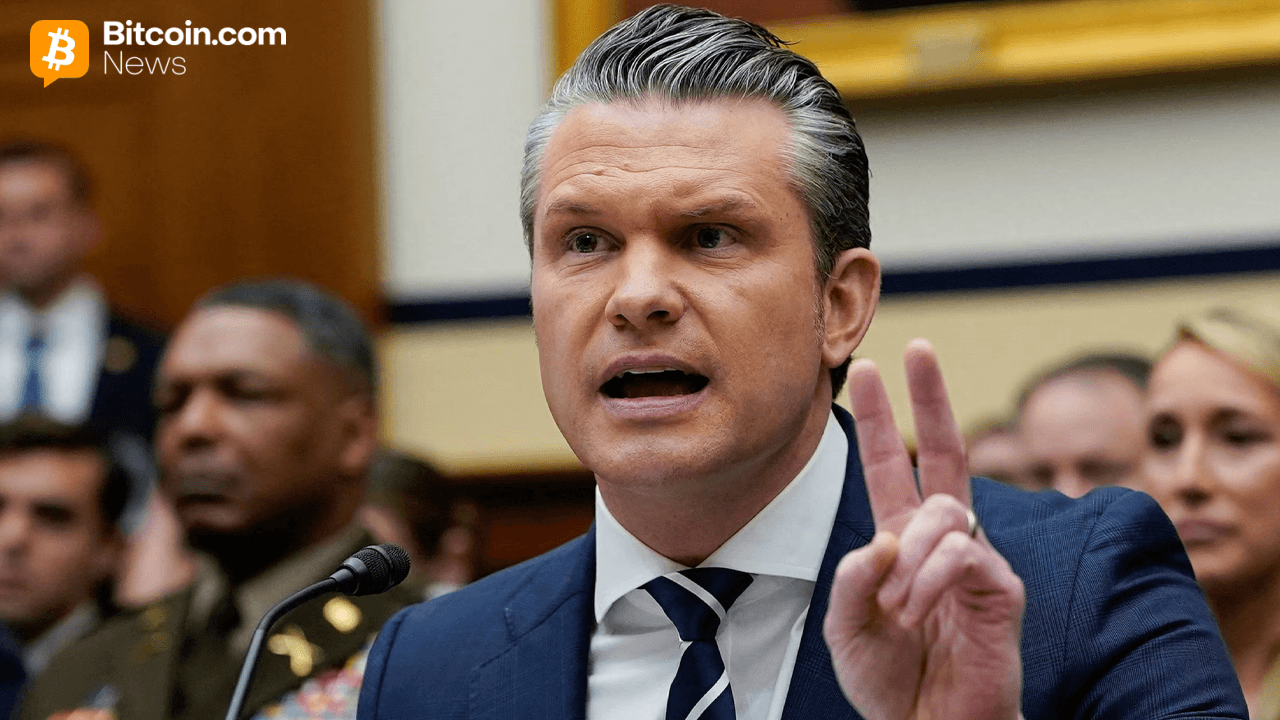
Hegseth delivered the remarks during a House Armed Services Committee hearing in response to questions from Texas Rep. Lance Gooden about securing a strategic advantage in Bitcoin.
“I am a long enthusiast of Bitcoin and crypto potential,” Hegseth told lawmakers, adding that ongoing initiatives tied to enabling or countering the technology remain classified. Hegseth added:
“A lot of the things we are doing, enabling it or defeating it, are classified efforts that are ongoing inside our department, which do provide us a lot of leverage in a lot of different scenarios.”
He framed those efforts as a source of leverage across multiple scenarios, linking Bitcoin’s architecture to national security applications rather than purely financial use. The comments follow testimony earlier this month from Samuel J. Paparo Jr., who confirmed that U.S. Indo-Pacific Command operates a live Bitcoin node and is testing the protocol in operational settings.
Paparo described Bitcoin as a computer science system built on cryptography, blockchain and proof-of-work, noting its potential to impose real-world costs in cybersecurity environments. Together, the statements mark a significant shift in how senior U.S. defense officials describe Bitcoin, moving from a focus on illicit finance concerns to its role as a technical instrument.
Hegseth also tied Bitcoin to geopolitical competition, stating it can serve as a counterweight to what he described as China’s model of digital control. His position aligns with broader Trump administration initiatives that view digital assets through a national security lens, including discussions around a potential strategic Bitcoin reserve.
Hegseth’s background reflects a longstanding interest in the technology, with prior disclosures showing personal holdings before divesting upon assuming his role. Market participants and policy observers have pointed to the remarks as another signal of growing institutional acceptance within federal agencies.
Clips from the hearing circulated widely across social media platforms, amplifying discussion about Bitcoin’s role beyond finance. The Defense Department has not detailed the scope of those programs, but testimony from both Hegseth and Paparo suggests continued exploration of Bitcoin’s infrastructure in national security contexts.
Crypto News,Bitcoin (BTC),United States US,WarBitcoin (BTC),United States US,War#Pentagon #Eyes #Bitcoin #Infrastructure #Strategic #Asset #Hegseth1777586874