

In brief
- Mozilla’s Project Nova redesign adds a single Settings control to disable all AI features in Firefox.
- Brave launched Brave Origin in April, a $60 one-time purchase (free on Linux) that compiles out AI, Wallet, Rewards, and telemetry entirely.
- Chrome recently removed its disclosure promising to keep Gemini Nano data off Google’s servers, adding fuel to the AI-in-browsers backlash.
The browser wars just got a twist: Instead of cramming more AI down your throat, Firefox is adding a switch to turn it all off.
Mozilla unveiled Project Nova on May 21—a full visual overhaul of Firefox rolling out later this year. The redesign is cleaner, warmer, and faster, featuring rounded tabs, a refreshed color palette inspired by fire, and compact mode finally making a comeback. But the headline feature for a growing slice of users isn’t the aesthetics.
It’s an anti-AI switch.
Mozilla is redesigning its settings with plain-language controls that make privacy choices easier to act on—including, per the official announcement, “controls for turning off AI features entirely.” No buried menus. No dark patterns. Just an off button.
It also comes with a graphic update, meant to make the new generation of Firefox browsers look a lot better.
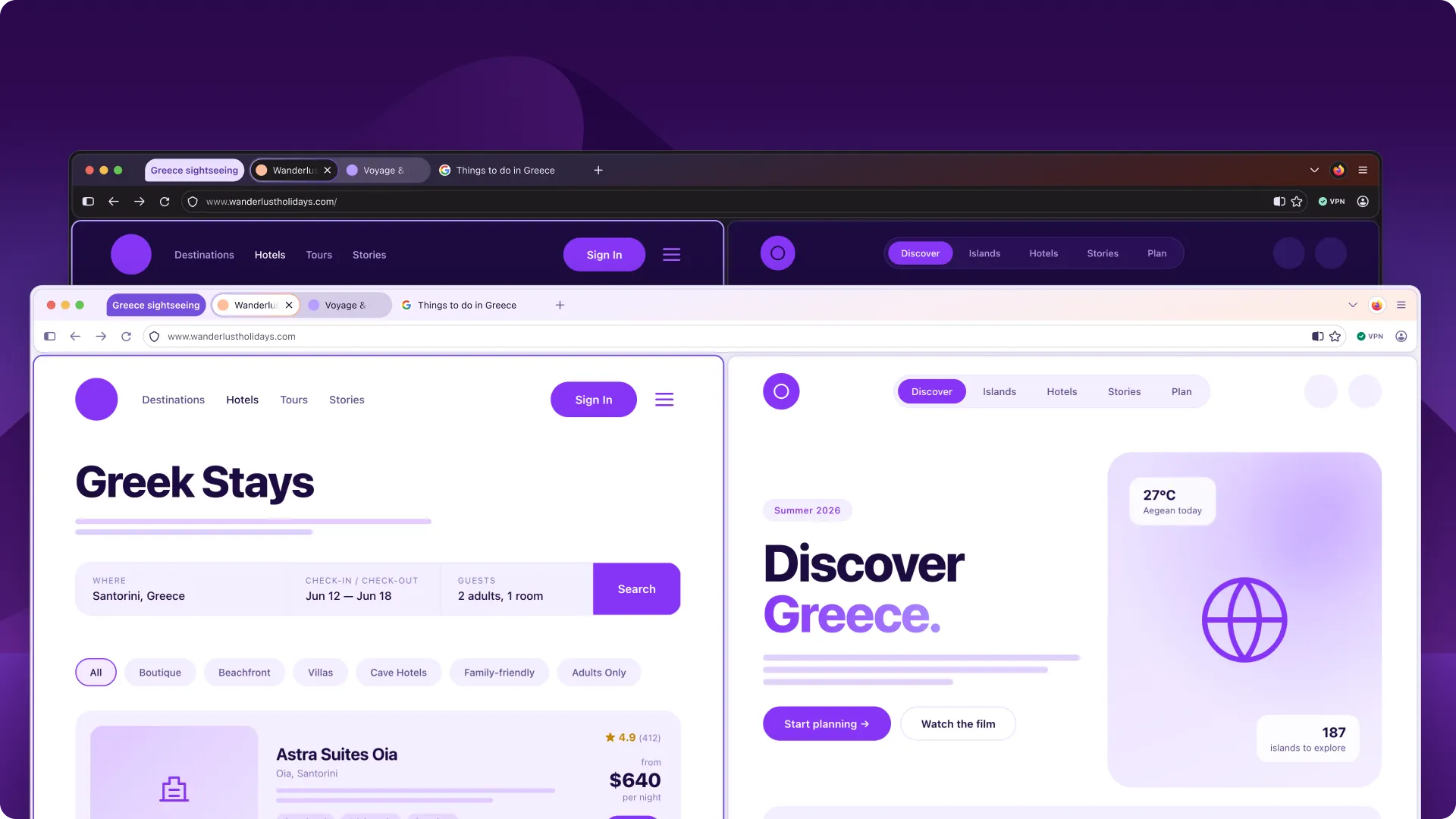
The timing couldn’t be better. Chrome has been quietly installing an undeletable 4GB Gemini Nano model on its users’ PCs. Meanwhile, browsers like Dia, Opera Neon, and Comet have been racing to build AI-first experiences that automate browsing and chat with your tabs.
Turns out not everyone wants that.
Brave noticed the same backlash. In April, the company launched Brave Origin—a paid browser build (one-time $60, free on Linux) that strips out everything: Leo (its AI assistant), Rewards, Wallet, VPN, Tor windows, and telemetry. Gone. The browser uses Privacy Pass blind token technology so the $60 purchase isn’t even tied to your device identity.
The idea came from real demand: tutorials on manually “debloating” Brave had been going viral for years. Brave just packaged the process and charged for it.
The fact that “no AI, no bloat” is now a paid product category says something.
Firefox’s approach is subtler. Mozilla isn’t abandoning AI features—its free built-in VPN and summarization tools remain options. Project Nova simply bets that giving users visible, honest control is a differentiator in 2026. “Firefox is still the only browser built for people, not platforms,” Mozilla said in its announcement.
That might read to some as a calculated jab at Chrome, which holds roughly 66% of global browser market share while running AI models in the background—with or without explicit consent from users. Firefox has been losing market share for years, sitting at around 4.44% as far back as 2020 with no major reversal since.
Making “off by default” a feature might be a gamble—but it also might be the most honest pitch in the browser market.
Daily Debrief Newsletter
Start every day with the top news stories right now, plus original features, a podcast, videos and more.
Artificial Intelligence#Firefox039s #Big #Redesign #Button #Kill1779556731