
Ethereum (ETH) co-founder Vitalik Buterin signaled a strategic shift at the Ethereum Foundation, confirming his personal influence on the board will continue to shrink while the organization sells less ETH and narrows its mission.
Buterin framed the Ethereum Foundation as one node within a wider ecosystem rather than its central coordinator. He said president Aya Miyaguchi is leading much of the transition, which should stabilize over the coming months.
Ethereum Foundation Steps Back From Central Coordinator Role
Buterin said the Foundation has been moving away from the central role many in the community wanted it to play. He attributed the shift partly to community criticism.
Critics said EF actions did not match the decentralization and privacy ideals he publicly championed.
Buterin noted the EF holds about 0.16% of all ether. That stake is lower than several individual holders. Rival chain foundations often hold 10% to 50% of supply.
He added that the Foundation’s original 2014 mandate was completed in 2022, when the chain finished its build through Frontier, Homestead, Metropolis, and Serenity.
Miyaguchi is executing much of the transition. The board is also expanding to dilute any single member’s influence, including Buterin’s own.
The move builds on the Foundation’s earlier leadership restructuring plan, which sought to streamline decision-making and reduce concentration of authority.
ETH Sales Reduced as Ethereum Foundation Focuses on CROPS
With its mandate redefined, the Foundation is concentrating on a smaller set of priorities. Buterin labels these the CROPS dimension. The acronym stands for censorship resistance, openness, privacy, and security.
Follow us on X to get the latest news as it happens
He said Ethereum should not chase high-throughput chains on raw speed alone, where rivals already have an edge.
Instead, the Foundation will pursue technical work that competing networks are unlikely to attempt. The reduced ETH sales policy frees resources for that longer arc.
“today, the EF is choosing to use its remaining resources to pursue longevity over breadth (yes, this means we sell less ETH),” Buterin articulated.
Concrete priorities include:
- Provably bug-free Ethereum, achievable through AI-assisted formal verification.
- Lean consensus is another goal, ensuring safety under asynchronous network conditions and 49% attacker scenarios.
- A third focus is intermediary minimization through proposals such as FOCIL and EIP-8141.
Buterin said wallet-layer projects like Kohaku aim to break dependence on third-party servers.
The Foundation’s previous ETH sale defense pointed in this direction earlier this year. A staking program for treasury further reduced reliance on outright sales.
Outside Players Expected to Fill Ethereum Foundation Gaps
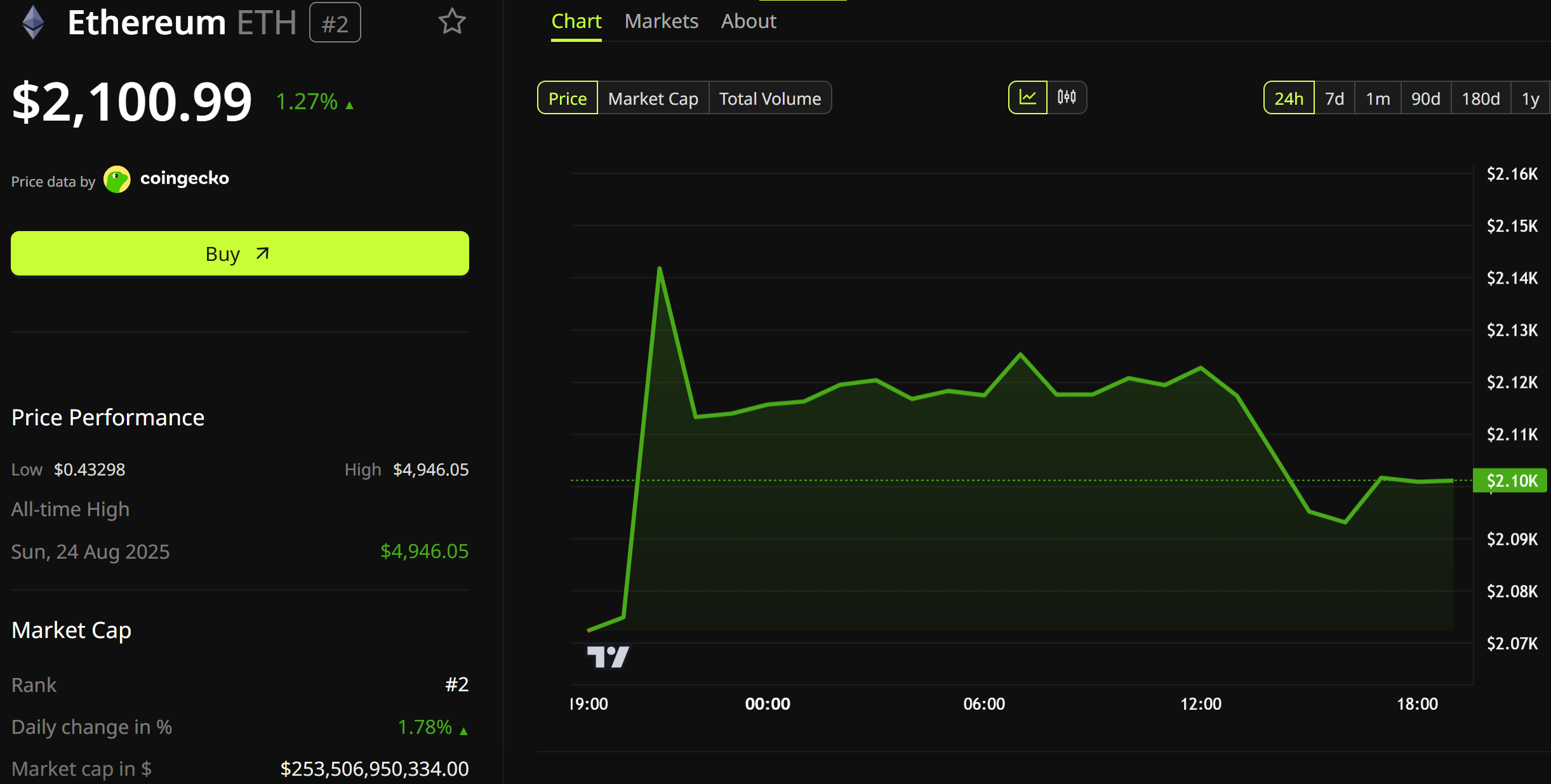
By narrowing its scope, the Foundation expects outside groups to absorb work it no longer prioritizes. Buterin said this includes activities supporting ETH the asset, which traded for $2,100 as of this writing.

Those activities fall outside what the EF intends to fund directly.
He noted that nearly 90% of his net worth sits in ETH. The remainder is allocated to open-source biotech, software, and hardware initiatives.
The Foundation will provide initial support to organizations stepping into roles it vacates. Specifics on those partnerships were not detailed.
The Foundation’s treasury holdings report showed earlier this year that 99.1% of EF reserves remain in ETH.
The transition period is expected to last several months. After that, the new mandate should stabilize into the Foundation’s long-term form.
Meanwhile, the broader Ethereum 2026 vision sits at the heart of that plan.
The post Vitalik Buterin Cuts Own Power at Ethereum Foundation as ETH Sales Slow appeared first on BeInCrypto.
Markets,Editor’s Pick,Ethereum (ETH) News,Vitalik Buterin News#Vitalik #Buterin #Cuts #Power #Ethereum #Foundation #ETH #Sales #Slow1779649467