

Crypto infrastructure company Startale Group has selected Sunnyside Labs’ Privacy Boost as the official privacy partner for its Startale App, built for Soneium, a Sony-linked blockchain network.
Startale Group said Tuesday that the integration will add self-custodial private transfer features to the app, including shielded balances, private peer-to-peer transfers and privacy-enabled payment flows on Soneium.
The move adds a consumer-facing privacy layer to Startale’s Sony-linked Soneium ecosystem as crypto apps try to give users more control over visible onchain activity while preserving compliance mechanisms for operators.
Sunnyside Labs co-founder and CEO Taem Park told Cointelegraph that selective auditability means transaction details remain hidden from the public, while authorized service operators can review them through a feature called Audit View.
Related: Japan’s SBI VC Trade launches retail USDC lending as stablecoin use grows
He compared the system to traditional finance, in which banks can view customers’ transactions for compliance purposes. “This means AML and regulatory obligations can be met without requiring all activity to be publicly transparent. This is a fundamentally different architecture from privacy tools that obscure transactions from everyone, including the operator,” Park told Cointelegraph.
The design leaves a key question over who ultimately controls access to private transaction data. While Privacy Boost is designed to hide transaction details from the public, its Audit View model preserves operator-level visibility for compliance purposes. That means users are relying not only on cryptography, but also on Sunnyside Labs’ controls around when and how shielded transaction records can be reviewed.
Selective disclosure faces privacy, compliance tradeoffs
The Audit View model puts Startale’s integration in the same category as privacy systems that try to keep transaction data hidden from the public while still allowing some form of review by trusted or authorized parties.
Zcash, one of the earliest privacy-focused blockchain networks, uses zero-knowledge proofs and supports selective disclosure through viewing keys. Secret Network uses a similar access-control concept for private smart contract data, with its documentation describing viewing keys as encrypted passwords for viewing data tied to a specific smart contract and private key.
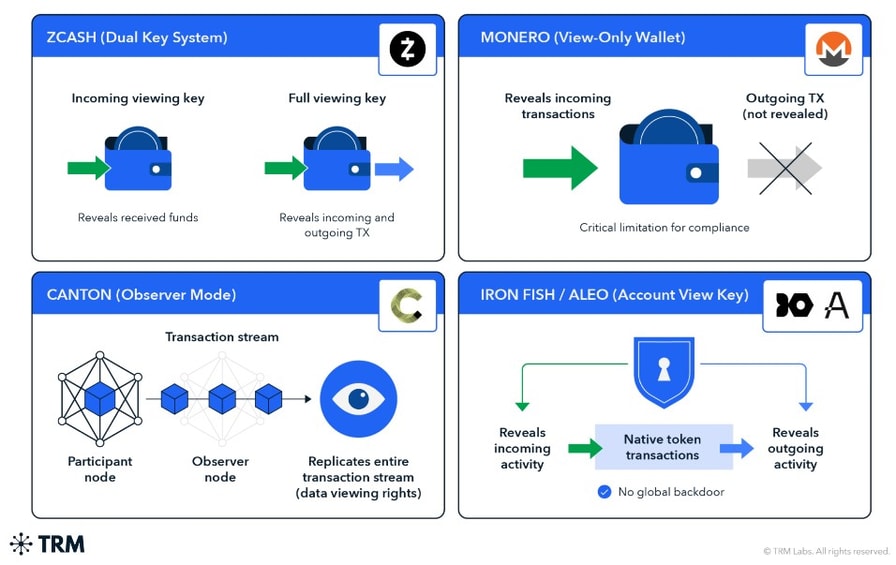
Examples of selective disclosure implementations. Source: TRM Labs
Blockchain analytics company TRM Labs said in a Feb. 19 report that transaction view keys provide “strong privacy but weak compliance utility,” particularly for high-value transfers, rapid fund movements or systemic monitoring.
Privacy Boost’s Audit View model appears to take a different approach by giving authorized operators access to private transaction records for compliance purposes. That may make the system more practical for regulated consumer applications, but it also means disclosure is not controlled only by users.
In its findings, TRM Labs said that “No single privacy regime satisfies all stakeholder needs.” However, the company added that hybrid approaches combining visibility, access controls and limits around private-asset conversions may offer the most workable path.
Magazine: AI-driven hacks could kill DeFi — unless projects act now
Latest News#Startale #add #Privacy #Boost #transfers #Sonylinked #Soneium #app1777383706