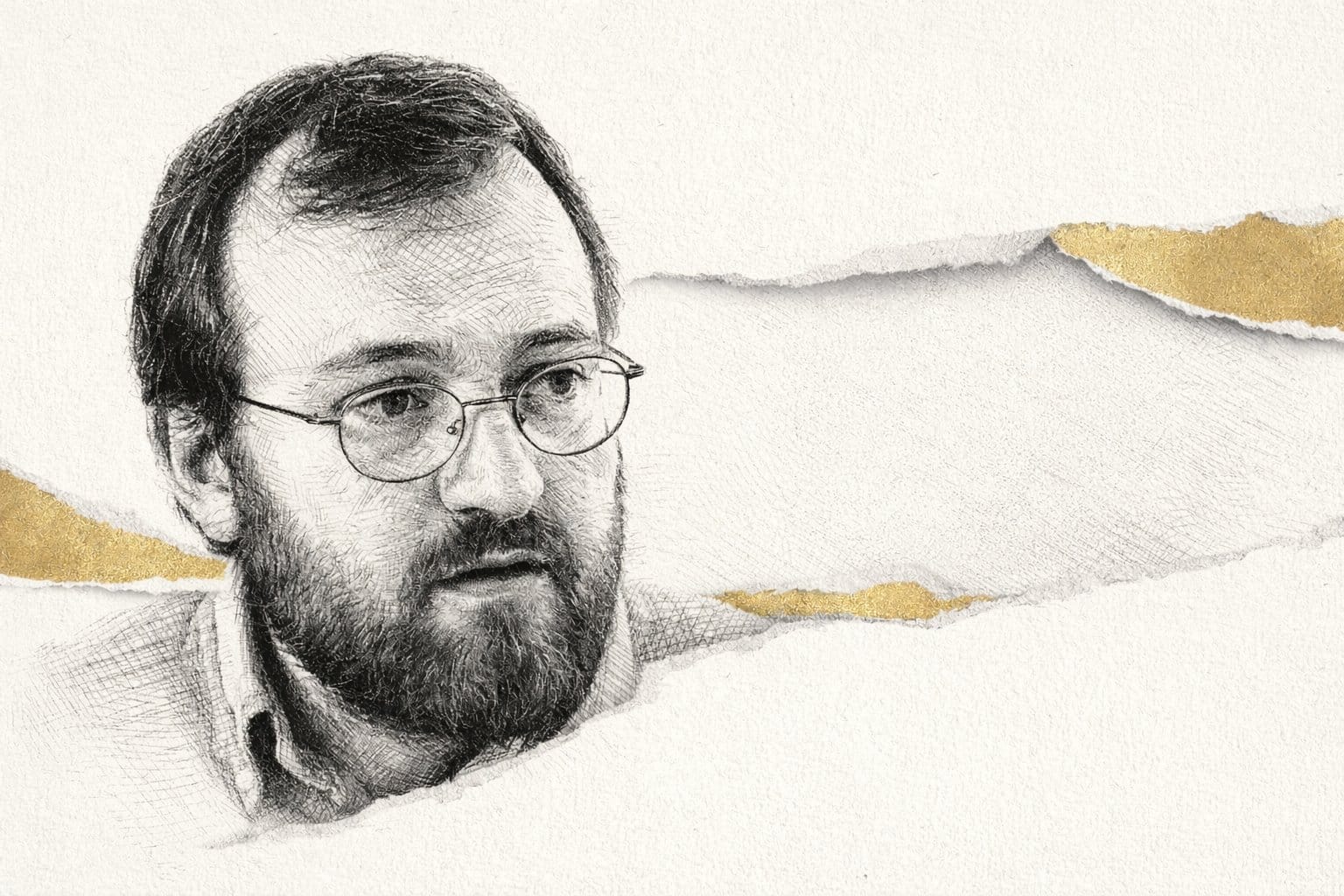

Cardano’s Charles Hoskinson argues BIP-361 is misclassified as a soft fork and cannot rescue the roughly 1.7 million BTC — including Satoshi’s — that predate modern wallet standards.
Posted April 17, 2026 at 6:45 am EST.
Cardano founder Charles Hoskinson delivered a public critique this week of BIP-361, a Bitcoin Improvement Proposal designed to protect the network against future quantum computing attacks. In a YouTube livestream, Hoskinson argued the proposal is incorrectly labeled a soft fork, would functionally require a hard fork, and cannot recover approximately 1.7 million BTC, including coins widely attributed to Satoshi Nakamoto.
BIP-361, authored by developer Jameson Lopp and a team of collaborators, proposes freezing bitcoin addresses with exposed public keys before a sufficiently powerful quantum computer could derive private keys from them using Shor’s algorithm. The proposal includes a zero-knowledge proof recovery system allowing holders of modern BIP-39 seed phrases to reclaim frozen funds.
This story is an excerpt from the Unchained Daily newsletter.
Subscribe here to get these updates in your email for free
However, freezing addresses at scale while invalidating existing signature schemes changes Bitcoin’s validation rules in a way that constitutes a hard fork, not a soft fork, Hoskinson says.
“To actually do this, you need a hard fork,” he said.
Lopp has since described BIP-361 as “a rough idea for a contingency plan” rather than a finished specification.
The more immediate problem, Hoskinson argues, is the approximately 1.7 million BTC that predate the BIP-39 standard, which was not widely adopted until around 2013. Those coins were generated using older wallet software that relied on a local key pool and have no associated seed phrase. The zero-knowledge recovery mechanism in BIP-361 is built around seed phrase verification, making it inapplicable to those holdings. Roughly 1.1 million of those coins are linked to Satoshi Nakamoto‘s early mining activity.
“There’s no zero-knowledge proof that I can construct for a system like that,” Hoskinson said.
Hoskinson outlined two outcomes if no alternative solution is found: a quantum attacker drains the coins and dumps them on the market, or the community implements a hard fork that permanently freezes the 1.7 million legacy coins.
He also said major institutional holders, including BlackRock, Strategy, and the U.S. government, will eventually use their financial weight to force a hard fork regardless of community objection.
“They own you now,” he said.
As of March 1, 2026, more than 34% of all bitcoin supply carries publicly exposed keys on-chain, according to a March Ark Invest report leaving approximately 8 million BTC vulnerable to a sufficiently powerful quantum computer.
Bitcoin,$10 million Bitcoin fund,BIP-361,bitcoin,Charles Hoskinson,Nic Carter quantum computing,quantum computing,yahoo$10 million Bitcoin fund,BIP-361,bitcoin,Charles Hoskinson,Nic Carter quantum computing,quantum computing,yahoo#Hoskinson #Bitcoins #Quantum #Proposal #Disguised #Hard #Fork #Leaves #Million #BTC #Unrecoverable1776432098