
Patrick Shyu, a former Meta and Google engineer, warns that Bitcoin faces two ticking time bombs. He points to quantum computing and decaying miner incentives as undefused threats.
Shyu also revealed he sold all his Bitcoin after suffering massive financial losses.
The First Time Bomb Quietly Draining Bitcoin’s Security
Shyu argues that Bitcoin’s first time bomb is the slow erosion of that budget as new coin issuance continues to shrink. His logic centers on the halving cycle. The block subsidy is cut roughly every four years and now stands at 3.125 BTC.
Furthermore, the next halving is expected in 2028, sharpening the debate over how miners get paid. The core problem is a missing fee economy.
Shyu noted that 95% of all Bitcoin is already minted. Moreover, he warned that the fee revenue meant to replace block rewards never fully materialized to fill the growing gap.
“Satoshi never imagined wrapped Bitcoins, never imagined most coins just sitting there, not moving, not paying fees, not getting attention. And so as the fees fade, miners switch off, security drops, the network weakens again, more miners sell off, and a slow death spiral could trigger,” Shyu noted.

His conclusion is stark and blunt. As fees fade, miners switch off, security drops, and the network weakens. Consequently, he fears a slow death spiral could eventually set in and threaten Bitcoin entirely.
Miner stress already appears in the data. Hashprice, a daily measure of mining revenue per unit of computing power, hovers around $30 per PH/s this month. Meanwhile, miners absorbed an 18% hashprice crash in late June.
“Nobody really knows what happens when the fees run dry. The original dream was sovereign money. Sounds great. But let’s be honest, too, that dream is very idealistic and maybe even dangerously naive”, the engineer said.

The Quantum Clock Racing Against Bitcoin’s Cryptography
Quantum computing is the second time bomb because a powerful enough machine could break Bitcoin’s cryptography. In theory, it could use Shor’s algorithm to derive private keys from exposed public keys, putting older addresses at direct risk.
The timelines vary widely across experts. Venture investor Nic Carter has pointed to a possible “Q-Day” around 2035. However, other research published this year has shifted some planning horizons closer to 2030.
“Now, eventually a powerful enough quantum computer could break through the cryptography guarding Bitcoin wallets. And look, maybe that’s not even going to happen. But regardless, I was stunned there’s been no cohesive plan or dev community who could put together a plan”, Shyu exposed.
Not everyone shares the panic, though. Several academics recently concluded that attacking Bitcoin’s mining process would require “the energy of a star.” The industry has mounted a broad security race to quantum-proof the chain.
“We couldn’t even stop each other from jamming junk metadata onto the chain, and this is who would have to coordinate a network-wide migration under deadline with hundreds of billions of dollars on the line”, the former Meta and Google engineer warns.
Concrete proposals are already emerging. BIP-361 is a three-phase soft fork that would eventually freeze coins, skipping migration to quantum-safe addresses.
Also, Starkware’s chief product officer published a scheme for quantum-safe transactions built from existing rules.
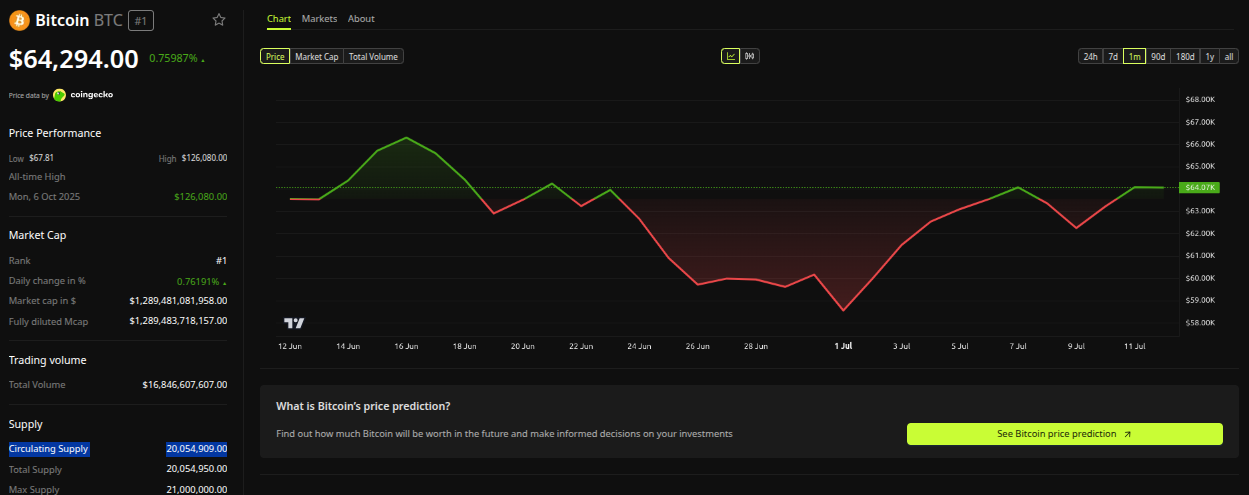
Shyu’s own exit was as much about leverage as protocol design. He admitted using excessive leverage, which triggered automatic liquidations when Bitcoin fell roughly 50% from its October 2025 peak near $126,000.
Subscribe to our YouTube channel to watch leaders and journalists provide expert insights.
The post Bitcoin Has Two Ticking Time Bombs, Ex-Meta and Google Engineer Warns appeared first on BeInCrypto.
Markets,Bitcoin (BTC) News,Cryptocurrency Market News,Editor’s Pick#Bitcoin #Ticking #Time #Bombs #ExMeta #Google #Engineer #Warns1783852851