
Key Takeaways
- Strategy sold 3,588 bitcoins for $216 million between June 29 and July 5 to fund preferred stock dividends.
- The sale sparked a brief Monday dip to $61,246, liquidating $214 million in short bets across the crypto economy.
- Bulls eye a credit rating upgrade and S&P 500 inclusion as Strategy builds a $2.5 billion USD cash reserve.
Strategy Sparks Debate With $216 Million BTC Sale
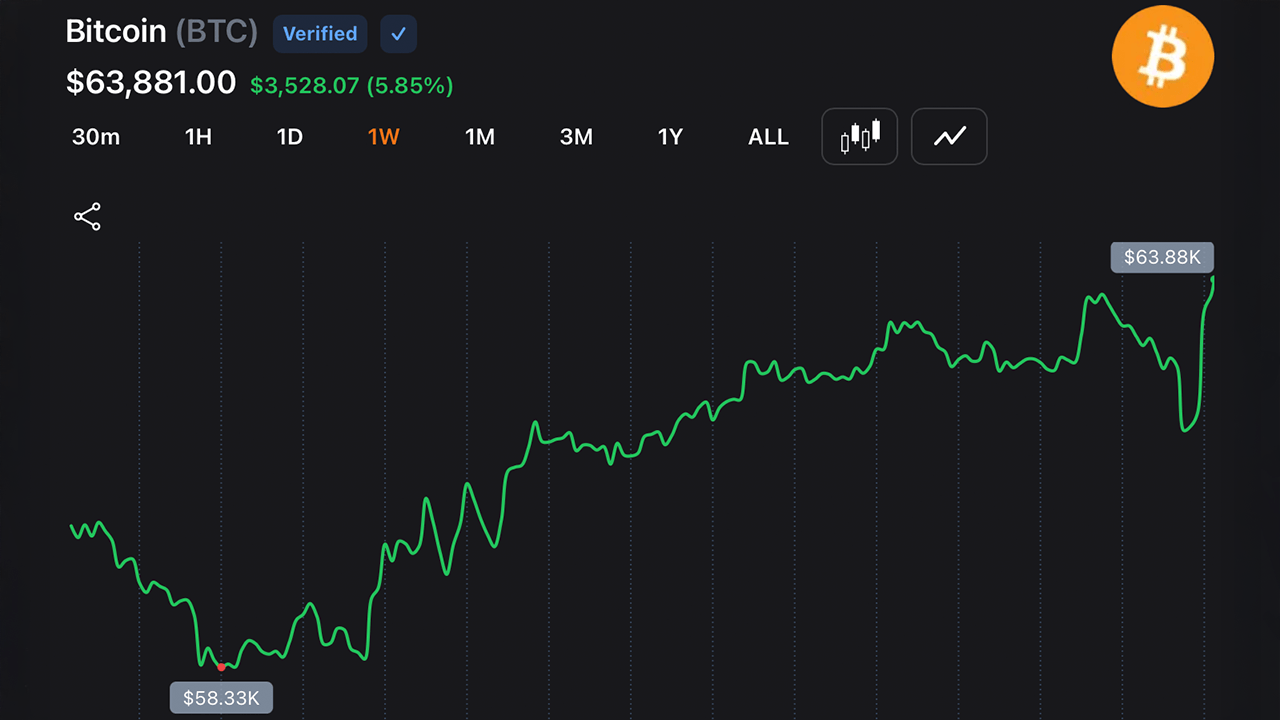
Bitcoin continued building on its weekend gains after breaching the $63,000 mark on Saturday, this time falling within a whisker of tapping $64,000. According to data from Bitstamp, the cryptocurrency reached a peak of $63,945 late Sunday before gradually declining, slipping just below $63,000 by 7:50 a.m. EDT on Monday, July 6.
About 10 minutes later, it traded at $61,934 following a sharp drop likely triggered by reports of yet another bitcoin sale by Strategy. The selling pressure continued pushing bitcoin to an intraday low of $61,246 before a relief rally wiped out nearly all the losses. At the time of writing, bitcoin was back above $63,500, representing a 24-hour gain of approximately 1.5%.
Since the beginning of July, the cryptocurrency has added more than $4,000, or approximately 7%, to its value—a remarkable turnaround for an asset that closed June with steep losses. As a result of the jump, bitcoin’s market capitalization climbed to $1.27 trillion, which in turn lifted the broader crypto economy’s aggregate market cap well past the $2.2 trillion mark.
In the derivatives market, bitcoin’s seesaw price action led to nearly $186 million in leveraged positions being wiped out, with short bets accounting for $108 million. Overall, the crypto economy saw $214 million in short bets liquidated versus $184 million in long bets.
As reported by Bitcoin.com News, Strategy sold 3,588 bitcoins for $216 million to fund dividend payments tied to its preferred stock. The disposal, which reduced the company’s total holdings to 843,775 bitcoins, came a week after the company secured authorization to sell up to $1.25 billion in bitcoin to support its U.S. dollar reserve. While this particular announcement did not spark a backlash similar to the one that followed Strategy’s sale of 32 bitcoins, it nevertheless failed to stop some from questioning Michael Saylor’s conviction.
The Play for S&P 500 Inclusion and Credit Upgrades
The harshest critics assert that the latest sale confirms what they have argued all along: that Strategy’s bitcoin strategy is, in essence, a Ponzi scheme. Observers noted that the same detractors who previously predicted STRC would go to zero are drawing entirely wrong conclusions from the sale and missing the broader corporate strategy.
Supporters argue the move is a calculated effort aimed at securing S&P 500 inclusion and achieving a better credit rating for the company’s financial products. For the first time, all five of Strategy’s preferred stock dividends were funded by capital raised through a bitcoin sale. Proponents say this directly dismantles the Ponzi narrative while demonstrating a clear willingness to liquidate holdings when necessary.
Furthermore, the sale serves to prove that the company can monetize its digital assets even during periods of market volatility. Last October, S&P Global used the term “ bitcoin stress” when it assigned Strategy a B-minus rating. Since then, Saylor has actively addressed the agency’s primary concerns by establishing a U.S. dollar reserve to improve liquidity, aggressively paying back convertible debt, and proving the company retains strong access to capital markets.
With its USD reserve now bolstered to $2.5 billion, market bulls maintain that the company is far from desperate for capital. Despite the surrounding market anxiety and misinformation, proponents view the execution as a net positive for the long-term outlook of the company and its stock.
News,Bitcoin (BTC),markets and pricesBitcoin (BTC),markets and prices#Bitcoin #Rebounds #Strategys #216M #Sale #Triggers #214M #Short #Liquidations1783361433