
The US sanctioned four crypto wallets tied to Iran’s Central Bank this week. Within hours, Tether froze $131 million in USDT sitting inside them.
It took one Treasury update and one flip of the Tether kill switch. USDT now doubles as a US sanctions weapon, and the industry is split over how issuers should police their coins.
How the Tether Kill Switch Became a US Sanctions Weapon
Treasury Secretary Scott Bessent announced the freeze. The Office of Foreign Assets Control (OFAC) simply added four Tron addresses to its existing Central Bank of Iran designation.
No new sanctions were needed. The bank has been blocked since 2019 over its support for the IRGC-Qods Force and Hezbollah.
“We will continue to aggressively follow the money and deny the Iranian regime access to the proceeds of its illicit revenue schemes,” Bessent said the campaign targets Iran’s abuse of digital assets.
The wallets had taken in more than $165 million in stablecoins, Chainalysis data shows. About $34 million slipped out first. Tether locked the remaining $131 million, nearly 80% of the total.
Here is what the freeze does. The tokens stay visible on-chain, but the addresses cannot spend or send them. It is not a seizure. Iran still holds the wallets. It just cannot use them.
The mechanics are simple and fast. OFAC names the addresses. Tether flips the switch at the token level. No court order is needed. A private offshore company now enforces US foreign policy in hours, through the third-largest crypto asset, worth $184 billion.
Tether helped block $344 million the same way in April. Frozen Central Bank funds now near $475 million. Seized Iranian crypto overall has reached roughly $1 billion.
OFAC also sanctioned Nobitex and other Iranian exchanges in June for facilitating the transfer of the bank’s stablecoins.
The fine print carries a warning, too. OFAC says its published wallet lists are not exhaustive. Any other address the bank controls is already considered blocked property.
That changes the game for Tehran. Washington is dismantling Iran’s $7.7 billion crypto network. Every remaining USDT holding sits one listing away from a freeze.
Why Circle Refuses to Do What Tether Does
Tether moves fast. Circle does not. The USDC issuer faces a Wisconsin criminal complaint for defying a court order in a romance scam case. The order required recovering roughly 381,000 stolen USDC for the victim.
Tether says it has frozen about $4.7 billion tied to crime. It has returned $1.1 billion to victims, per ICIJ. Circle only acts under a strict legal process. Policy chief Dante Disparte called that gap a policy problem in an April post.
“Circle is a regulated company that complies with sanctions, law enforcement orders, and court-mandated requirements… Regarding seizure requests, the legal structures that would authorize stablecoin issuers to act faster—while preserving due process and property rights—do not yet fully exist,” a Circle spokesperson told BeInCrypto.
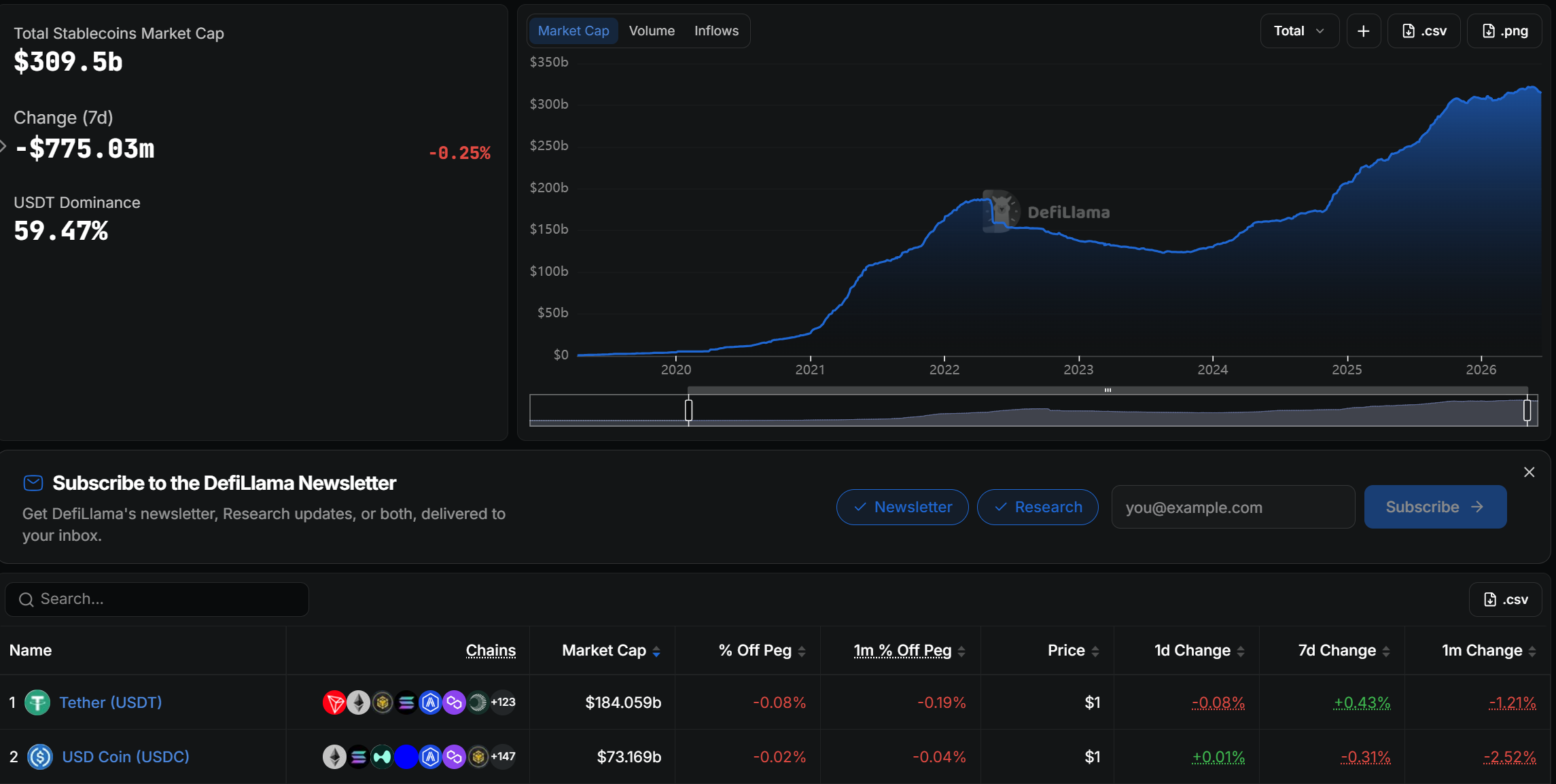
For now, USDT still dominates the $310 billion stablecoin market, with about 59%, DefiLlama data shows.

The open question is simple. Will sanctioned actors keep using a coin that can be switched off?
The post One Sanctions List and a Kill Switch: How Tether Enforces US Policy on Iran appeared first on BeInCrypto.
Regulation,Editor’s Pick,Iran,Stablecoin News,Tether (USDT) News,USDC News#Sanctions #List #Kill #Switch #Tether #Enforces #Policy #Iran1784223769