

Key Takeaways
- Peter Todd, Adam Back, and the Hal Finney-Len Sassaman duo each faced Satoshi claims in 2024-2026, with all three denying it.
- Polymarket gives Adam Back only a 6% chance of confirmed Satoshi identity by Dec. 31, 2026.
- The “Finding Satoshi” documentary, released April 22, 2026, argues Bitcoin had 2 co-creators, not one.
The Hunt for Satoshi Nakamoto Heats up Again as 3 New Investigations Name Suspects
Over the years, prior to a hiatus, a string of self-proclaimed Satoshi Nakamotos and outside accusations have kept Bitcoin’s origin story permanently unsettled. From Craig Wright’s long-running legal campaign to a parade of cypherpunk candidates, the search has become a recurring fixture in crypto media, and interestingly, the trend is really picking up steam again.
Between October 2024 and April 2026, three high-profile investigations, including a HBO documentary, a New York Times deep dive, and a feature-length film, each pointed to a different person or pair of people as the pseudonymous creator of Bitcoin. None delivered a smoking gun, and none produced the cryptographic proof that would settle the question.
Peter Todd Steps Into the Spotlight
The onset of the new wave began on Oct. 8, 2024, when HBO released “Money Electric: The Bitcoin Mystery,” directed by Cullen Hoback. The film argued that Peter Todd, a Canadian Bitcoin Core developer, was Satoshi Nakamoto. Hoback built his case around Todd’s early cypherpunk activity, forum posts, his use of Canadian English, and what the director framed as suspicious technical overlap with Satoshi’s final known writings. The film documented that Todd was communicating with Hal Finney and Adam Back when he was just 15 years old.
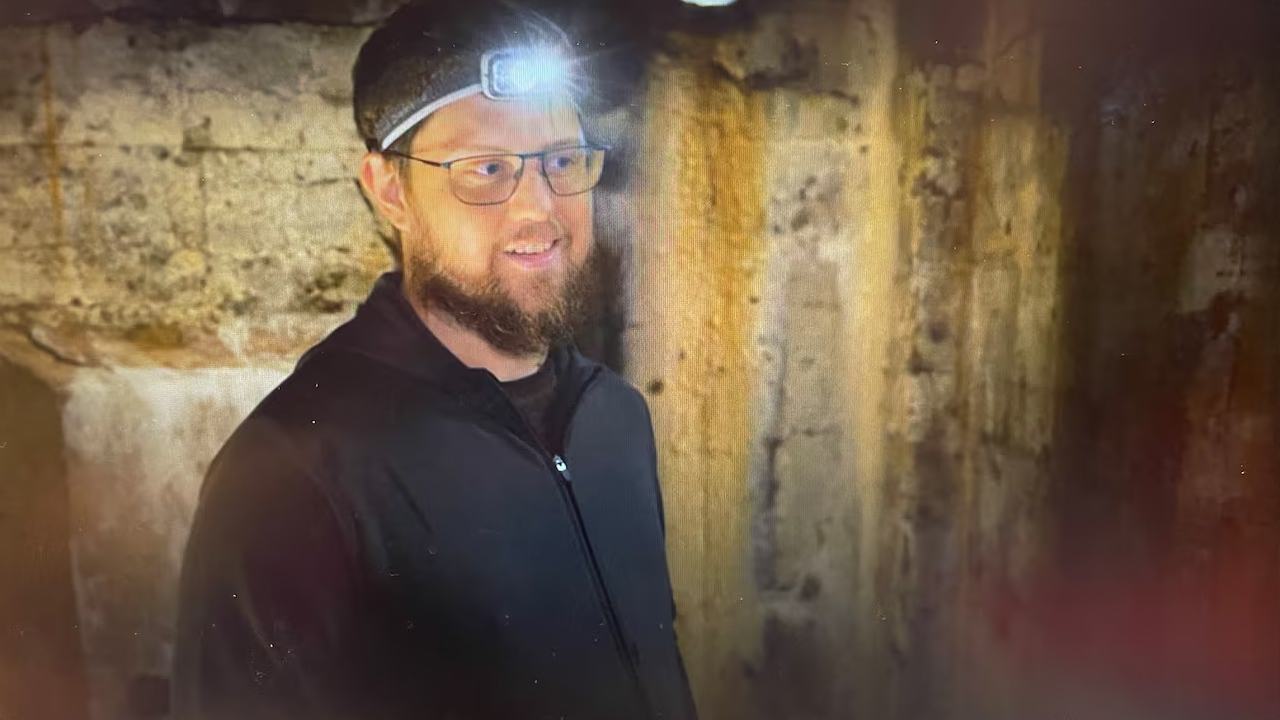
Todd rejected the claim immediately and without hesitation. He called the idea “ludicrous” and compared the reasoning to “QAnon-style coincidence thinking.” The broader Bitcoin developer community sided with Todd, dismissing the film’s argument as circumstantial. Hoback’s case rested on a forum post where Todd appeared to write as Satoshi and then walk it back, but critics noted the evidence was too thin to support the conclusion. No cryptographic proof was offered. The roughly 1.1 million BTC long associated with Satoshi’s early mining activity remained unmoved.
John Carreyrou Turns His Eye to Adam Back
On April 8, 2026, the New York Times published an exhaustive investigation by John Carreyrou, the reporter known for his Theranos coverage. The piece, titled “My Quest to Solve Bitcoin’s Great Mystery,” was the product of roughly a year of research. Carreyrou applied linguistic filters across decades of cypherpunk mailing list archives, narrowing the candidate pool to one name: Adam Back, the British cryptographer and CEO of Blockstream.
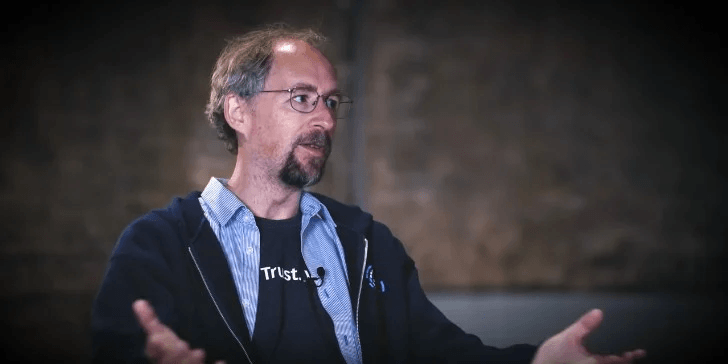
The stylometric case was detailed. Carreyrou cited specific patterns, including Back’s alternation between “e-mail” and “email,” sentence-ending use of the word “also,” and the unhyphenated spelling of “double-spending.” He also pointed to a near-verbatim parallel between a Back post from 1996, “I’m better at coding than constructing convincing arguments,” and a Satoshi post from 2008, “I’m better with code than with words.” Back is the only person explicitly cited in the Bitcoin white paper, as the inventor of Hashcash, the proof-of-work system Bitcoin’s mining mechanism draws from directly.
Back denied it. He called the similarities unremarkable among cypherpunks and said the overlaps were the product of a shared intellectual culture, not shared identity. No cryptographic verification accompanied the Times report. Prediction market Polymarket, which opened a contract on April 9, 2026, asking whether Back would be confirmed as Satoshi by Dec. 31, 2026, placed the odds at 6%, with $14,598 in total volume.
Hal Finney and Len Sassaman: The Case for Two
Two weeks after the Times piece, on April 22, 2026, a separate documentary made a different argument entirely. “Finding Satoshi,” the result of a four-year investigation by author William D. Cohan and private investigator Tyler Maroney of Quest Research, argued that Satoshi was not one person but two.
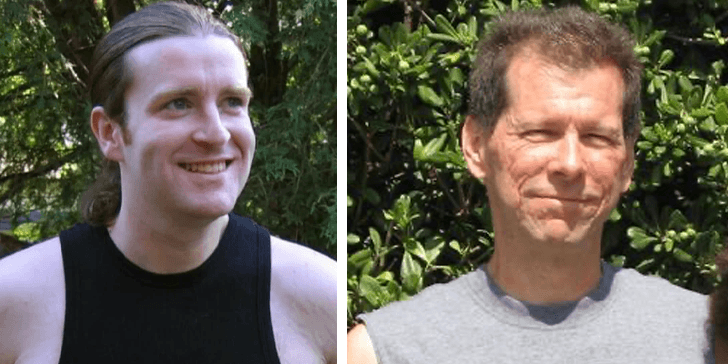
The film proposed that Hal Finney, the software engineer who received the first bitcoin transaction from Satoshi on Jan. 12, 2009, handled the core code, while Len Sassaman, a cypherpunk privacy expert and PhD candidate at the Katholieke Universiteit Leuven, wrote the white paper and managed external communications. Both men are deceased. Finney died in 2014 after a years-long battle with ALS. Sassaman died by suicide on July 3, 2011, the same year Satoshi made his last known public communication.
The investigators pointed to a data analysis by scientist Alyssa Blackburn, whose work on Bitcoin’s early mining rhythms and online activity patterns matched both men. Finney’s widow, Fran, was shown in an archival interview appearing to pause when asked whether her husband helped build Bitcoin, a moment the filmmakers treated as meaningful. Sassaman’s widow, Meredith Patterson, told investigators she believed a secret collaboration between the two men was possible.
No Smoking Gun in Any of the Three
The documentary drew notable responses. Coinbase CEO Brian Armstrong called it the “most thoughtful” examination of the Satoshi question and said he suspected the filmmakers had reached the right answer. Cryptographer Jon Callas, a PGP co-founder, told investigators the early Bitcoin team appeared to be a group effort and said one of the men could have been among the creators.
Still, no cryptographic evidence was produced. There is no signed message from Satoshi’s known keys confirming the identities. There is no movement of the coins. Adam Back, for his part, has argued that Sassaman’s timezone data does not line up with the timestamp patterns in Satoshi’s posts. Back in 2023, American software engineer Jameson Lopp argued that it couldn’t be Finney either because he was participating in running competitions during times Satoshi was active.
The three investigations, taken together, contradict each other in key respects. Each eliminates candidates that the others endorse.
The Coins Have Not Moved
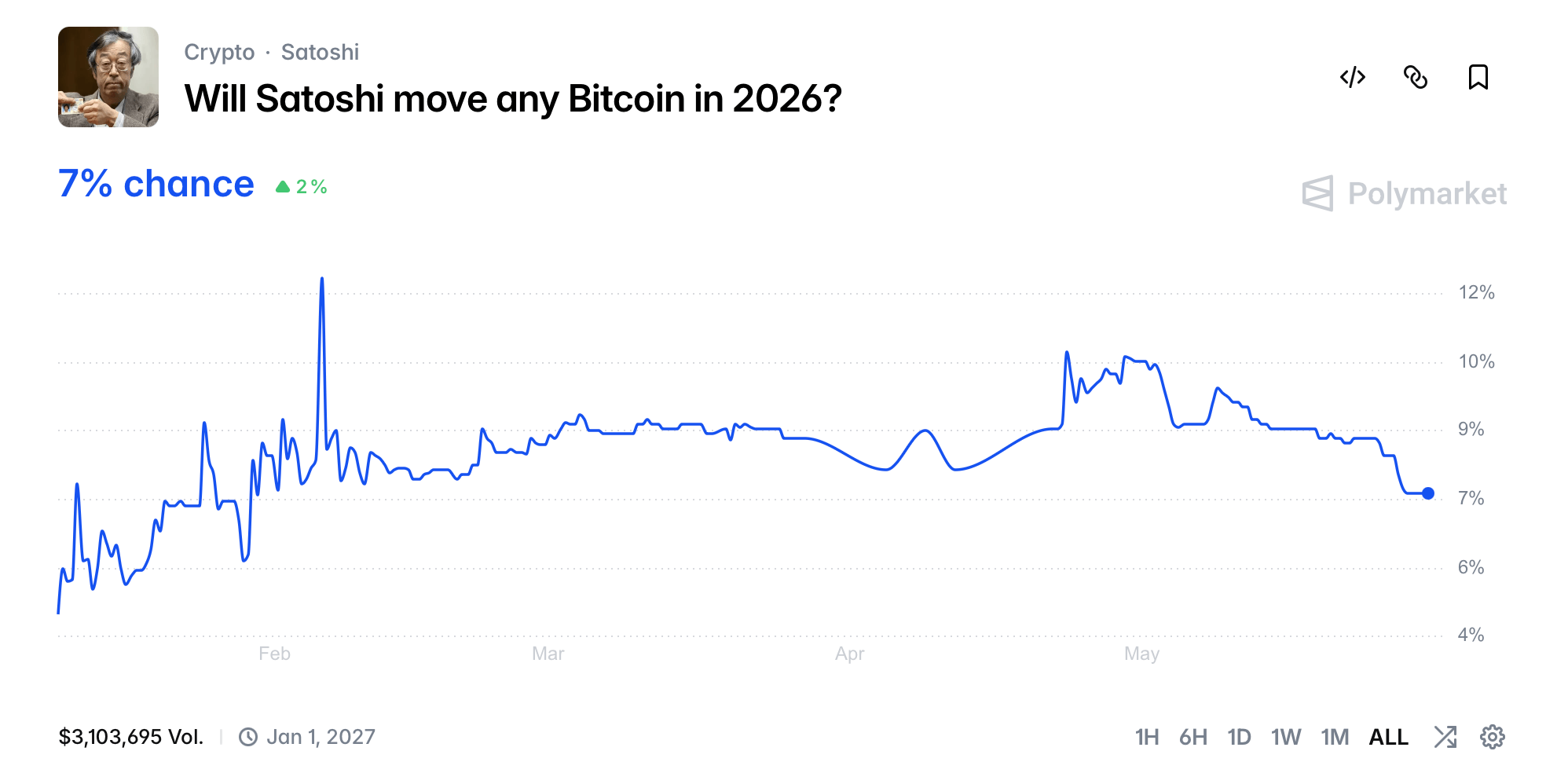
Polymarket’s broader contract, asking whether any wallet identified as Satoshi’s on Arkham’s Intel Explorer would show an outflow or swap by Jan. 1, 2027, put the odds at 7%, with $3.1 million in total trading volume. The market reflects what the bitcoin community has largely concluded: the coins are not moving, and no reveal is coming.
The Mystery Holds
The Bitcoin community has largely settled into the view that identifying Satoshi does not change what Bitcoin is or how it works. The decentralized network functions the same regardless of who launched it. But the investigations keep coming, and the subject continues to draw serious journalists and filmmakers. Until someone signs a message with Satoshi’s known private keys or moves even a small amount of the roughly 1.1 million early-mined BTC, every theory remains a theory. Three separate efforts across 18 months pointed at four different people and reached three different conclusions. The question is no closer to being answered.
Featured,Bitcoin (BTC),Satoshi NakamotoBitcoin (BTC),Satoshi Nakamoto#Todd #Sassaman #Finney #Named #Satoshi #Investigations #Proof1780167399