
The House Ways and Means Committee is circulating seven draft bills that would rewrite how the United States taxes digital assets. The package targets stablecoins, staking and mining, and crypto lending.
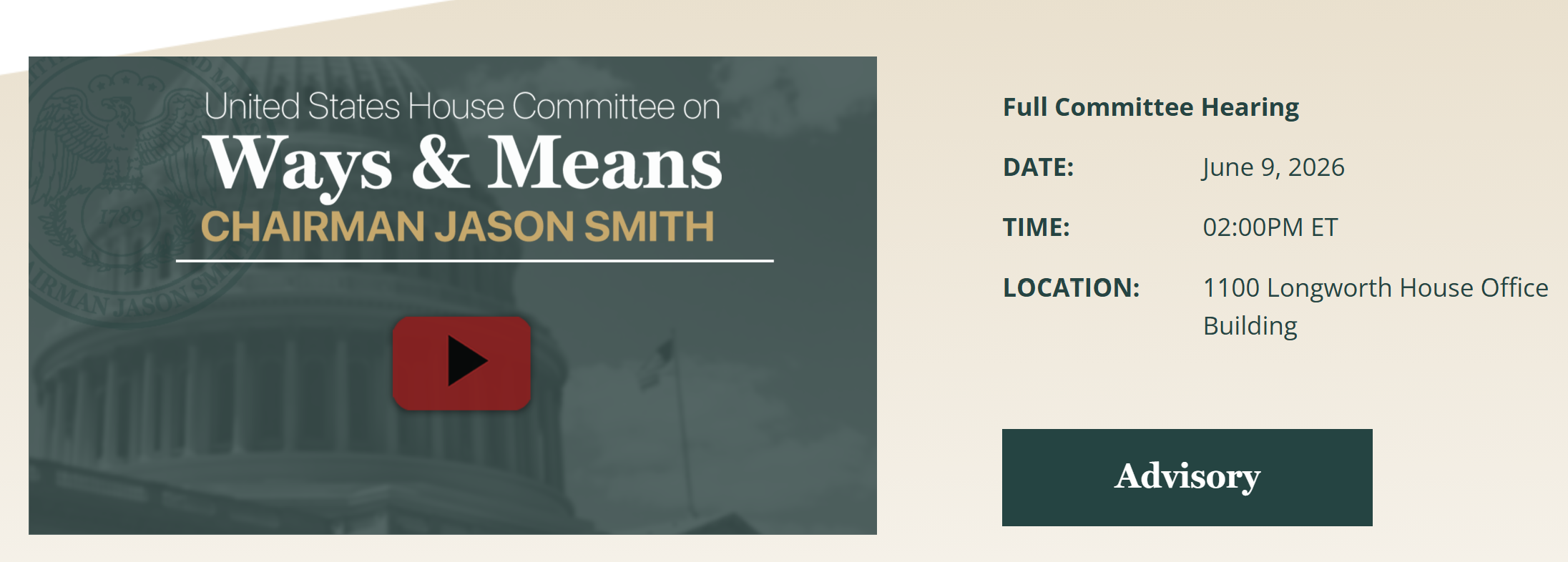
The drafts surfaced days before a full committee hearing on digital asset taxation scheduled for June 9. They break a broader bipartisan tax bill into standalone proposals that members can advance separately.
Seven Bills, Three Sectors in Focus
The committee is reportedly circulating the seven discussion drafts internally. As part of the package, they split apart the Digital Asset PARITY Act, first floated as an earlier discussion draft and introduced on May 19 by Representatives Max Miller and Steven Horsford.
Committee leadership has made digital asset taxation a priority this session, with stablecoins sitting at the center of the effort.
The PARITY Act would stop routine payment transactions from triggering tax reporting. A separate Senate crypto tax bill from Senator Cynthia Lummis proposed a $300 de minimis exemption with a $5,000 annual cap.
Staking and mining form the second target. Both proposals would let validators and miners defer income until they sell rewards.
That approach eases the phantom income problem, which taxes tokens before holders cash them out.
The PARITY Act would also let active traders and dealers elect mark-to-market accounting, matching how securities are taxed.
Lending Rules and a Closing Loophole
Crypto lending rounds out the three sectors. The PARITY Act would extend securities lending rules to digital assets.
A bona fide loan would no longer count as a taxable sale, and the effort runs parallel to separate market structure rules moving through Congress.
The drafts would also apply wash sale rules to crypto for the first time. Traders would have to wait 30 days before claiming a loss and buying back in.
Stock investors already face that limit, yet crypto holders do not.
The package would further simplify charitable donation rules for liquid tokens while curbing abuse from speculative ones.
Bitcoin advocates, however, have opposed the legislation over its mining provisions. Lummis estimated her version would raise roughly $600 million between 2025 and 2034. That figure shows revenue, not only relief, drives the debate.
A prior Senate crypto tax hearing showed how slowly these measures move. The June 9 session should reveal which of the seven drafts can win bipartisan backing.

Subscribe to our YouTube channel to watch leaders and journalists provide expert insights
The post US House Targets 3 Crypto Sectors in 7-Bill Tax Overhaul Push appeared first on BeInCrypto.
Regulation,Crypto Tax News,Editor’s Pick,Stablecoin News,Staking,US Regulation#House #Targets #Crypto #Sectors #7Bill #Tax #Overhaul #Push1780672978